
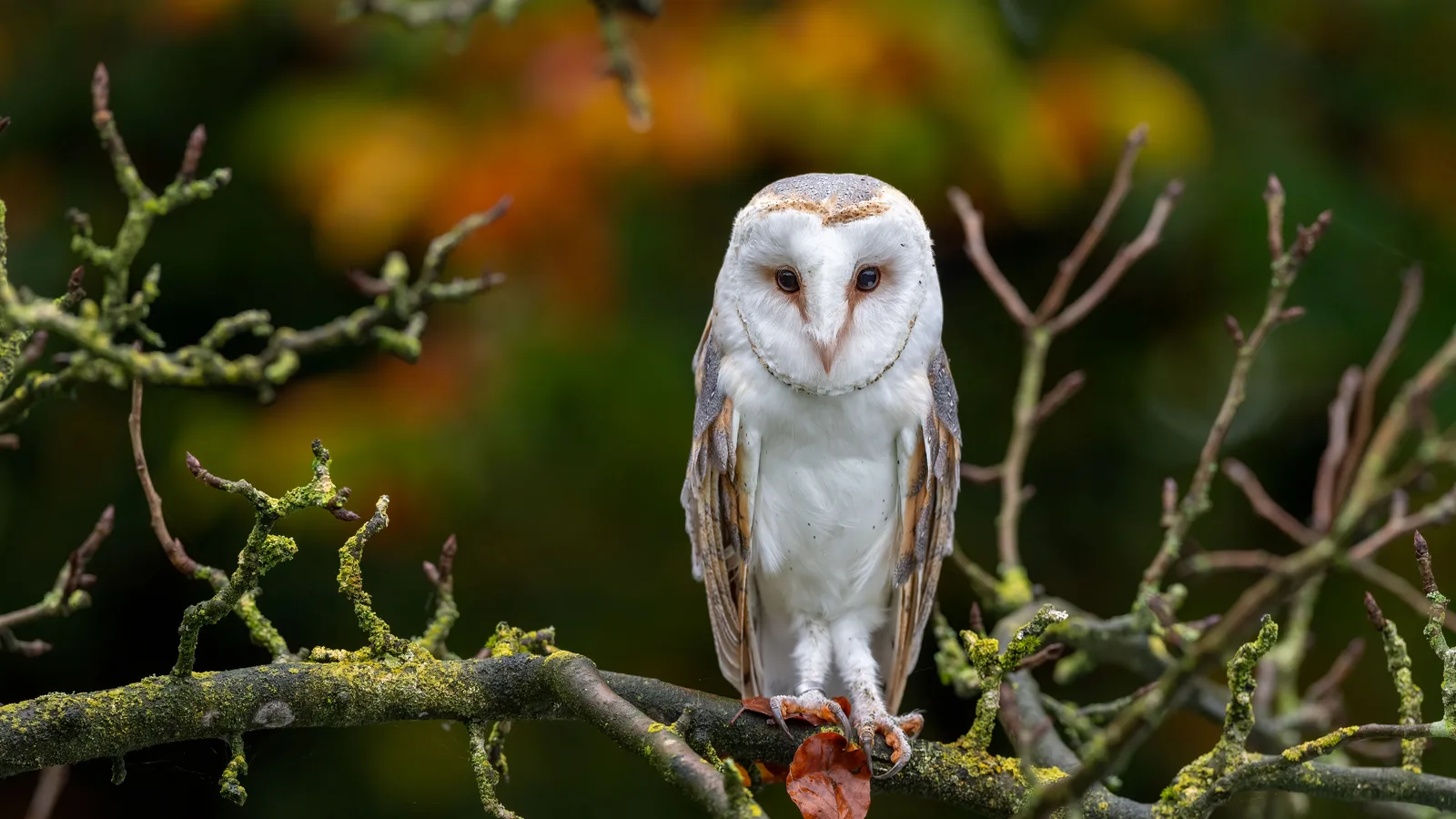
A family of American barn owls has been raised in a rooftop water tank on the Upper West Side. Over the past two weeks, Manhattan Bird Alert, the birding account that tracks wildlife across the borough, has posted night photos of the young owls perched on the tank's supports, trying short flights and, more recently, venturing out to explore the buildings around it.
What birders have seen
Manhattan Bird Alert's first photo of the family, posted on Oct. 10, showed two young barn owl siblings out at night on the Upper West Side. Two days later it posted a portrait of three young siblings together, taken the previous Thursday, and reported that most of them could already manage short flights around the water tank where they grew up.
Through the following week the account kept posting. On Oct. 13 it shared a close view of an owl on the tank's support structure, taken from a neighboring rooftop with the help of two residents. On Oct. 15 it reported that the young owls were flying more often and farther, and had started visiting nearby buildings. On Oct. 16 it posted a photo of two of the owls side by side. Its most recent posts, on Oct. 18 and Oct. 19, show an owl perched at night on a building near the nest.
The account has not published the exact address, and its photos are all taken after dark, when barn owls are active.
Why a barn owl nest here is unusual
Barn owls are rare in New York State. The state Department of Environmental Conservation, in its most recent species assessment for the American barn owl, describes the bird as rare everywhere in the state and notes that New York sits at the northern edge of its range, where hard winters limit how far north it can live. The state counts it as a Species of Greatest Conservation Need.
The DEC's numbers show how scarce breeding barn owls have become. The first New York Breeding Bird Atlas, in 1980 to 1985, found the species in 126 survey blocks across the state. The second, in 2000 to 2005, found it in 28. In the third atlas, still underway when the assessment was written in 2024, the owl had turned up in 5 priority blocks. Most known nesting in the state is on Staten Island and Long Island, where the birds depend heavily on nest boxes put up for them.
Barn owls do not dig their own holes. The DEC describes them as secondary cavity nesters that will take over almost any sheltered space: tree hollows, cliffs, barn lofts, church steeples and nest boxes. The agency notes that their numbers tend to be limited by the supply of good cavities close to plenty of small mammals to hunt.
What happens next
Young barn owls do not stay put for long. According to the DEC, young birds disperse widely from where they hatched, in every direction, sometimes as far as 1,900 kilometers (about 1,180 miles). Adults, by contrast, tend to keep nesting at the same site for as long as they live, and barn owls are unusual among birds of prey in that a pair can raise two or more broods in a single year.
That means the young owls now exploring neighboring roofs are likely to head off on their own in the coming weeks, while the adults may remain at the tank. Barn owls are protected under the federal Migratory Bird Treaty Act regardless of their state status.
Following the owls
Manhattan Bird Alert posts its owl photos on Bluesky as @birdcpk.bsky.social and runs a separate reporting account, @mbalerter, on X. The same account has been tracking other owls around Manhattan this fall, including a barred owl that spent several weeks in Central Park's Ramble and around the Loch in September and October.
Anyone hoping for a look should plan on nighttime, keep a respectful distance and keep noise and lights down: the owls have been out after dark, and the posts so far show them on rooftops and building ledges rather than at street level.
Sources
- Manhattan Bird Alert, Oct. 10 post: two young barn owl siblings on the Upper West Side
- Manhattan Bird Alert, Oct. 12 post: three young siblings around the water tank
- Manhattan Bird Alert, Oct. 13 post: barn owl on the tank's support structure
- Manhattan Bird Alert, Oct. 15 post: young owls flying farther and exploring nearby buildings
- Manhattan Bird Alert, Oct. 16 post: two barn owls side by side
- Manhattan Bird Alert, Oct. 19 post: barn owl perched near its nest
- New York State Department of Environmental Conservation, American Barn Owl Species Status Assessment (updated Oct. 24, 2024)
Loading comments…