
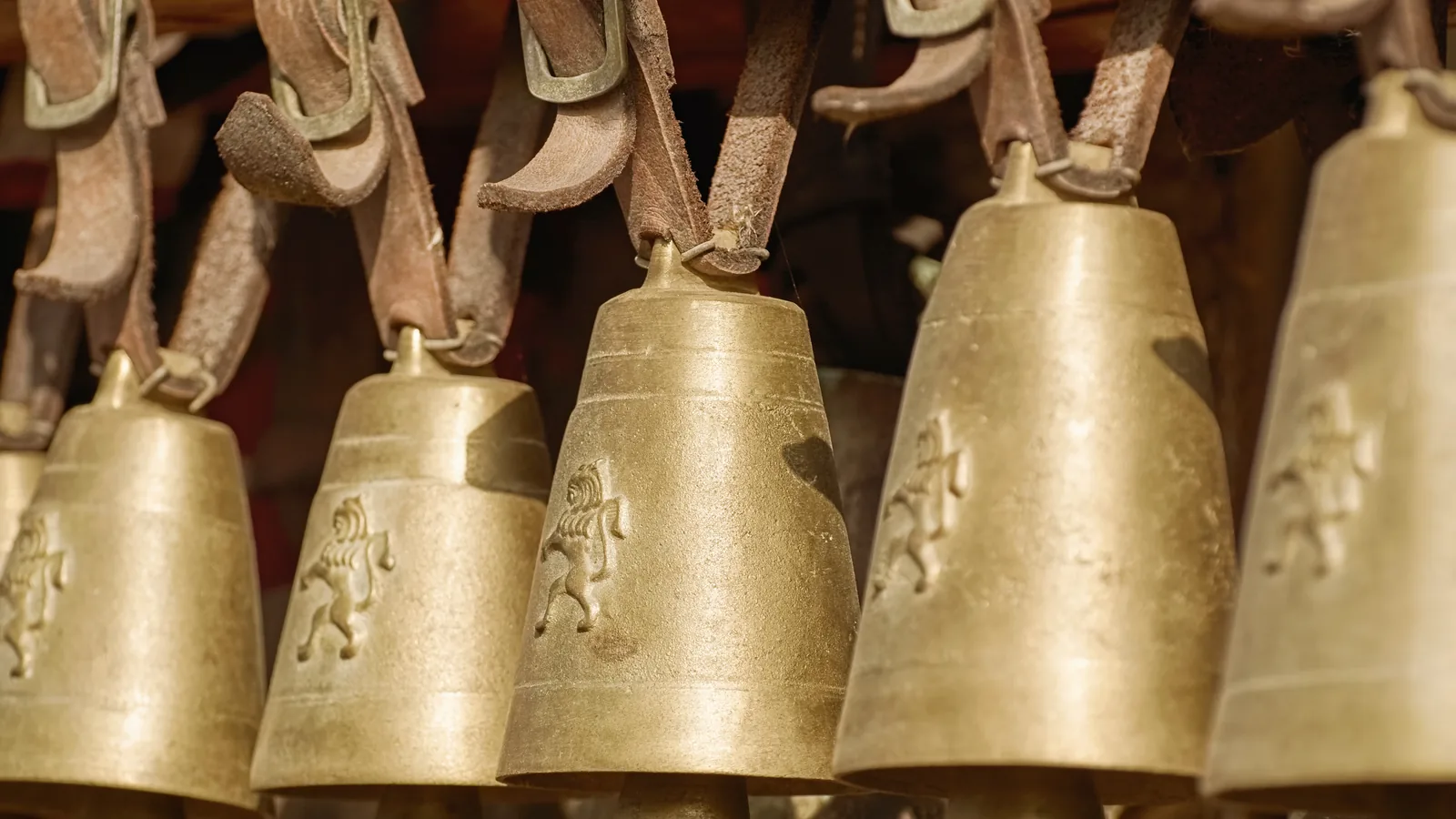
A new exhibition by the artist Tuan Andrew Nguyen opens Friday, October 30, at Norr Cohan's two Tribeca galleries at 48 and 52 Walker Street. Titled Sacred Forest / Rừng Thiêng, the show pairs the premiere of a new film with sculptures made from the metal of the Vietnam War: artillery shells and bomb casings recovered from Quảng Trị province in central Vietnam and reworked into mobiles, bells and a large wall piece. It runs through December 19, 2026.
This is Nguyen's fourth solo exhibition with the gallery, according to Norr Cohan, and it fills both of its Walker Street spaces between Broadway and Church Street in Lower Manhattan.
What is in the show
The gallery describes the exhibition as a single environment that visitors move through in sequence. The first room holds a suspended kinetic installation: a group of mobiles that stand in for the forest the metal came from. Each piece is forged from reclaimed 57mm artillery shells, and each is tuned to a resonant frequency, so the mobiles sound as they move.
Past the mobiles, a separate gallery is given over to Tiger Mountain (2026), a sculpture more than 3.5 meters tall whose arches refer to the peaks of Quảng Trị just south of the former Demilitarized Zone. During the war, U.S. Marines used peaks there, including the one they called Tiger Tooth Mountain, as outposts. Long before that, the gallery notes, the jungle was home to wild tigers, regarded locally as guardians of the mountain. Three demined bomb casings hang from the arches, polished to a mirror finish and turned into bells tuned to 432 Hz in collaboration with sound healers. A companion piece, Tiger Tooth (2026), holds a single bell.
Next comes Fire Tops (2026), a round wall work about 240 centimeters across, built from more than 3,000 small discs that were rolled and pounded from artillery shell casings. Nguyen speeds up the oxidation of the brass to pull out turquoise and umber tones, with touches of fluorescent safety orange.
The new film
The center of the exhibition is the first screening anywhere of Sacred Forest / Rừng Thiêng (2026), a new film shot in Đakrông, a mountainous district of Quảng Trị where unexploded ordnance is still part of daily life. The cast is drawn from the Bru-Vân Kiều community. The story follows Khuyên, an eight-year-old girl whose parents clear unexploded bombs from the forest for a living. In a dreamlike space between life and death, she is guided by a spirit in the form of a saola, a critically endangered forest animal sometimes called the Asian unicorn.
Music carries the film. It was recorded on location and performed on traditional handmade instruments by a Bru-Vân Kiều ensemble. In the gallery, the saola appears again as a marble head with horns forged from brass taken from unexploded ordnance, set beside a group of river stones brought in from the film's landscape.
About the artist
Nguyen was born in Saigon in 1976 and came to the United States with his family as refugees in 1979, according to his gallery biography. He studied fine arts at the University of California, Irvine, and earned an MFA from the California Institute of the Arts in 2004. He now lives and works in Ho Chi Minh City, where he co-founded the arts space Sàn Art, and in 2006 he was a founding member of The Propeller Group, an artist collective.
New Yorkers may know his work from his 2023 solo presentation at the New Museum on the Bowery. He has since had solo shows at the Fondació Joan Miró in Barcelona, Zeitz MOCAA in Cape Town and the Smithsonian American Art Museum in Washington, all in 2024, and at the Art Institute of Chicago in 2025.
Visiting
- Where: Norr Cohan, 48 Walker Street (ground level) and 52 Walker Street (2nd floor), Tribeca, Manhattan
- When: October 30 through December 19, 2026
- Hours: Tuesday through Saturday, 10 a.m. to 6 p.m.
- Contact: 212-714-9500
The gallery's own listing does not mention tickets or an admission charge. Because the film is at the heart of the show, plan enough time to sit through it before or after walking the sculpture rooms.
Getting there
Walker Street runs one block south of Canal Street. The Canal Street stations on the A, C and E and on the N, Q, R, W, J, Z and 6 lines are each a short walk away, and the Franklin Street stop on the 1 train is a few blocks to the west. Several other Tribeca galleries share the same block of Walker Street, so the show fits easily into a Saturday afternoon gallery walk.
Check Norr Cohan's website before you go for any reception or screening times added to the schedule.
Loading comments…