
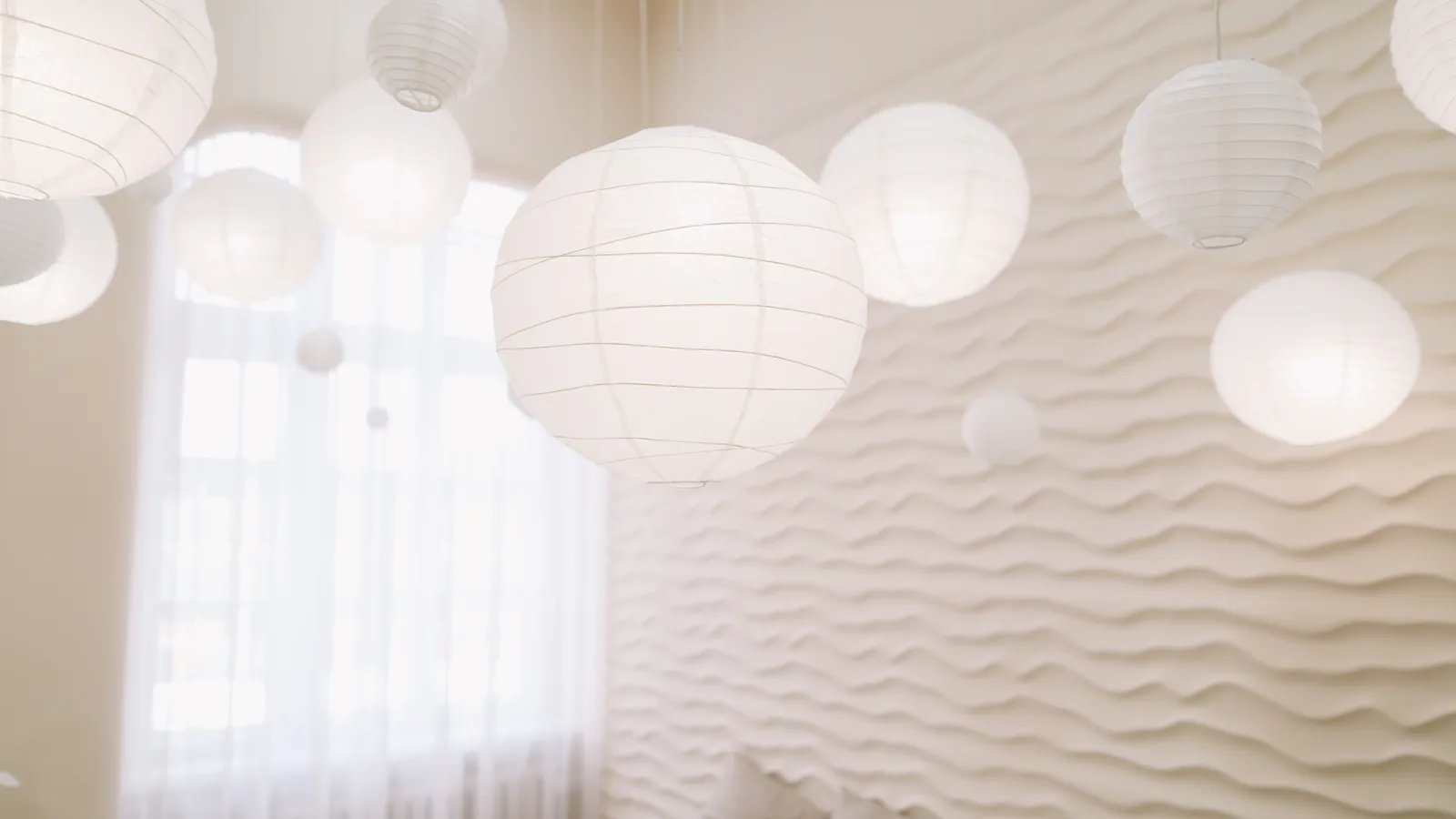
The Noguchi Museum in Long Island City opens No Ordinary Light: Akari at 75 on Wednesday, November 4, an exhibition built around the paper and bamboo light sculptures Isamu Noguchi began making in 1951. The show runs through September 5, 2027, at the museum's home on 33rd Road at Vernon Boulevard.
The museum's second floor galleries have been closed since mid-September while the exhibition was installed, and admission has been half price during that stretch. That discount ends November 1, and the full building reopens with the new show three days later.
Where Akari came from
According to the museum, Noguchi made his first Akari during a 1951 visit to Gifu, Japan, where the city's traditional chochin lanterns led him to rethink what a paper lantern could be. He kept the handmade, folding structure of the lantern and changed nearly everything else: the shapes of the shades, the electric bulbs inside them and the modern wire bases they stand on.
Over the next three decades he designed more than 200 distinct models. He named them Akari, the Japanese word for light, a word the museum says carried two meanings for him at once, illumination and weightlessness. Noguchi treated each model as sculpture rather than as a lamp, and he showed them that way, in galleries beside his stone and metal work.
What is in the exhibition
The museum says the show follows the many settings where Noguchi presented Akari during his career, from small rooms in people's homes to large installations, and places the lights next to his sculptures in stone, metal and clay.
Two historical moments shape the displays. The first is Akari's debut: a tea ceremony held at the Eames House in Pacific Palisades, California, in 1951. The second is Noguchi's solo presentation as the United States representative at the 1986 Venice Biennale, where Akari hung alongside his large stone and steel works. The museum is already marking that Venice show with a separate, single-gallery archival display, Light and Stone, on view through May 9, 2027, so the two exhibitions can be seen on the same visit.
The exhibition draws on the museum's own archive, which holds photographs of Noguchi working on paper templates for Akari designs in 1952 and of workers building the lights at Ozeki & Co. in Japan around 1978. The works the museum pictures with the exhibition include Personage I, a 1984 sculpture in andesite, and Atomic Haystack, a galvanized steel piece from 1982 to 1983.
The show is curated by Kate Wiener, a curator at the museum, and Matthew Kirsch, its curator and director of research.
Free day and November programs
The first chance to see the exhibition without paying comes two days after it opens. The museum is free on the first Friday of every month, and Friday, November 6, is a free day from 10 a.m. to 5 p.m. with no reservation needed. That afternoon there is a public tour in Spanish at 1 p.m. and a family gallery kit session from 2:30 to 4:30 p.m., both included with free admission.
Other programs on the museum's November calendar:
- Sunday, November 1, noon to 2 p.m.: an Education Resource Room for Día de los Muertos, with art-making in the Level C education room.
- Saturday, November 7, 2:30 to 4:30 p.m.: a free family gallery kit session.
- Saturday, November 14, 10 a.m. to noon: a special edition of Mindfulness in the Galleries led by ikebana teacher Anjie Cho, pairing Japanese flower arranging with Noguchi's work. Registration is required.
- Sunday, November 15: a free family Open Studio from 11 a.m. to 1 p.m., a drawing session in the galleries from 3 to 5 p.m. (registration required) and a museum tour in Mandarin Chinese at 3 p.m.
How to go
The Noguchi Museum, 9-01 33rd Road at Vernon Boulevard, Long Island City, Queens. Open Wednesday through Sunday, 11 a.m. to 6 p.m., with last entry at 5:30 p.m.; closed Monday and Tuesday. Tickets are sold at the door and advance reservations are not being taken. General admission is $16, and $6 for seniors 65 and older and students with ID. Admission is free for children under 12, New York City public school students, visitors with disabilities and their carepartners, and SNAP recipients with an EBT card.
The nearest subway is the N or W to Broadway, the 7 to Vernon Boulevard-Jackson Avenue, or the F to 21st Street-Queensbridge on weekends (the M on weekdays). The NYC Ferry's Astoria route stops nearby.
Loading comments…