
Last May, the artist and teacher Derek Haffar spent his time aboard a sailing ship in the Arctic. On Thursday, Oct. 22, he brings what he made there to the Greenpoint Library and Environmental Education Center on Norman Avenue, where he will play the work for the audience, show slides from the trip and take questions. The free program, called Journey to the Arctic: An Artist's Experience, runs from 6 to 7:30 p.m.
What the residency is
Haffar went north with The Arctic Circle, an expedition residency that has been running since 2009. Each year it brings a group of artists, scientists, educators and designers from different countries to live and work on an Arctic-class schooner, a traditionally rigged sailing vessel, as it travels the waters of Svalbard, the archipelago that sits about 10 degrees of latitude from the North Pole. Participants work on their own projects on board and on shore, and the program is set up so that people from different fields end up collaborating along the way. The ship carries workspace and common areas for that purpose.
What he made
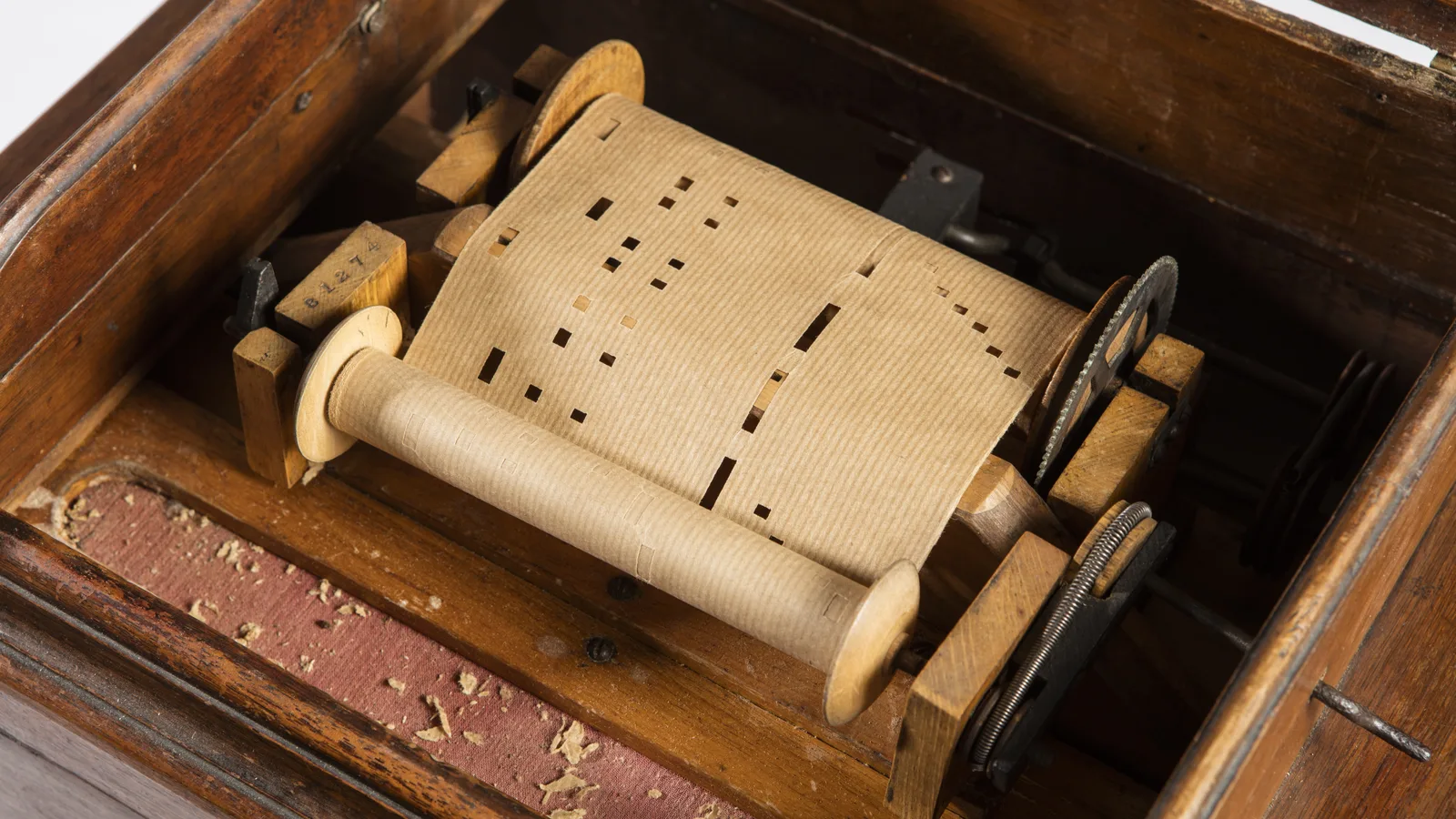
According to the library's listing, Haffar's Arctic projects combined three things: sound, made with custom music box movements; photography; and poetry. For the Greenpoint program, the music box pieces will be played in a format that brings the audience into the performance, paired with slides and his notes from the voyage, followed by a conversation.
The talk is tied to a small display of his work that has been up on the library's second floor since Oct. 7, so anyone who stops by the branch before or after Thursday can see some of it in person.
Who Derek Haffar is
Haffar grew up in upstate New York and earned an MFA at Bard College. He teaches part time at Parsons School of Design and is an adjunct professor in continuing education at Pratt Institute. He has also spent years as a fabricator and studio assistant for other artists, including Matthew Barney, Red Grooms and Tom Otterness, and he worked as an exhibit specialist for the Wildlife Conservation Society, the organization that runs the city's zoos and the New York Aquarium.
The library notes that the zoo exhibit work changed the way he builds his own pieces and made him pay closer attention to how industrial art methods affect the environment. His practice now leans on repeated, iterative work and on sustainability, and he moves between painting, sculpture, wire figures, photography and typed poetry. His own site also shows a 2025 series of natural ink paintings made at the Bay of Fundy and a photography project built around View-Master reels.
Why it is at this branch
The Greenpoint branch is not a typical neighborhood library. Its full name is the Greenpoint Library and Environmental Education Center, and it works as both a full-service branch and a community hub for environmental education. The 15,000-square-foot building has a planted reading deck, windows designed to work as sundials, and a cistern that collects rainwater for a rooftop demonstration garden, along with lab spaces for hands-on projects and a community event room. A talk about art made on a climate and science expedition fits the branch's program, which the library files under climate and the environment, artist talks and live music.
How to go
Journey to the Arctic: An Artist's Experience is Thursday, Oct. 22, from 6 to 7:30 p.m. at the Greenpoint Library and Environmental Education Center, 107 Norman Avenue at Leonard Street. It is free, and the library is taking registration through the event page on bklynlibrary.org. The building is fully accessible. The closest subway is the G train at Nassau Avenue, a short walk away, and the B24, B43, B48 and B62 buses all stop nearby. The branch is open until 8 p.m. on Thursdays, so there is time to see the second-floor display before the talk starts.
Loading comments…