
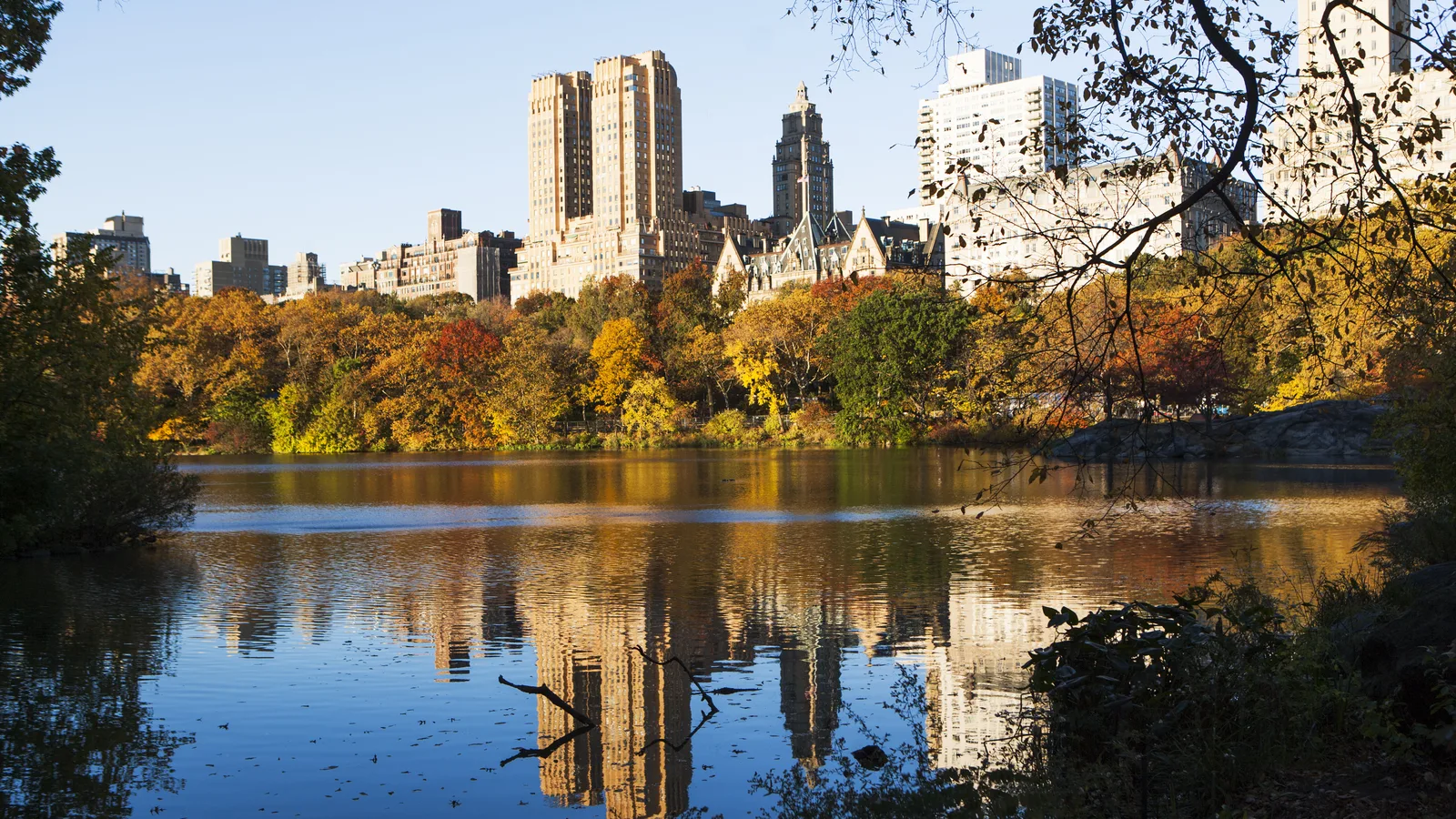
Work has started on a $35.7 million project to change how water moves through the north end of Central Park, and the people who stand to gain most live on the other side of the park wall in Harlem and East Harlem. Called the North End Recirculation Project, it will catch and reuse rainwater across the park's northern landscape instead of sending it into the sewers that serve the surrounding blocks, and it will stop topping up three of the park's lakes and ponds with city drinking water.
The city, the state and the Central Park Conservancy announced the groundbreaking on Monday. Completion is expected in fall 2028.
Three waters, one loop
The Pool, the Loch and the Harlem Meer were built between 1862 and 1865 as a single connected water system, designed by Frederick Law Olmsted and Calvert Vaux. Today the main source that keeps them filled is the city's drinking water supply.
The new system will recirculate and filter water among the three. In dry weather, water will be drawn from the Meer and pumped south of the Pool, then flow back down through the Loch and into the Meer by gravity.
Making room before the rain
The flood protection comes from timing. When a major storm is forecast, the system will lower the water level in the Harlem Meer ahead of it, leaving space for incoming rain. As the storm arrives, the rainwater refills the Meer and the other water bodies instead of running into the combined sewer system that serves the park and its neighbors. When conditions return to normal, recirculation picks up again.
The city expects the project to keep about 132 million gallons of water a year out of local sewers and to cut stormwater flows from a 204-acre watershed inside the park to the city's sewers by 90 percent. That is the piece meant to ease pressure on the sewers during heavy rain in Harlem and East Harlem.
Saving drinking water, cleaning the Meer
Because the three waters will no longer depend on the drinking water supply to stay full, the project is expected to save about 175 million gallons of potable water a year. The city and the Conservancy also expect better water quality in the Pool, the Loch and the Meer, with fewer of the algal blooms that grow in warm months.
Who is paying
The funding comes from the city, the state and private donors. It includes more than $19.6 million in city capital money, $14.2 million of it from the Department of Environmental Protection, and a $10 million Green Resiliency Grant from the New York State Environmental Facilities Corporation, paid for by the 2022 Clean Water, Clean Air and Green Jobs Environmental Bond Act. City Council Speaker Julie Menin added $2 million, Manhattan Borough President Brad Hoylman-Sigal $500,000 and Council Member Gale Brewer $100,000, and Central Park Conservancy donors contributed $3.5 million.
All five community boards that border Central Park supported the project, and the city's Public Design Commission gave it final design approval in December 2024.
Visiting the north end
The Harlem Meer sits at the park's northeast corner, by Fifth Avenue and Central Park North at 110th Street. The 2 and 3 trains stop at 110 St-Central Park North, and the 6 stops at 110th Street and Lexington Avenue. The Pool is near West 101st Street, and the Loch runs through the North Woods between them.
The project runs through fall 2028. Updates on the work are posted by the Central Park Conservancy and the Mayor's Office.
Loading comments…